
Keyfive Makes Energy System Monitoring More Explainable with Latest Tech Releases
An energy system can produce thousands of data points and still leave basic questions unanswered, such as: what happened, why did it happen, and what should we make of it?
This month, Keyfive advanced three connected, AI-enabled capabilities that help operators turn system data into a clearer account of performance.
“We’re proceeding towards an entirely unsupervised, non-expert AI system that’s meant to make it so that anyone can understand what’s going on with their system,” says Daniel Barnett, Keyfive CTO.
1. A scorecard that connects operations to outcomes
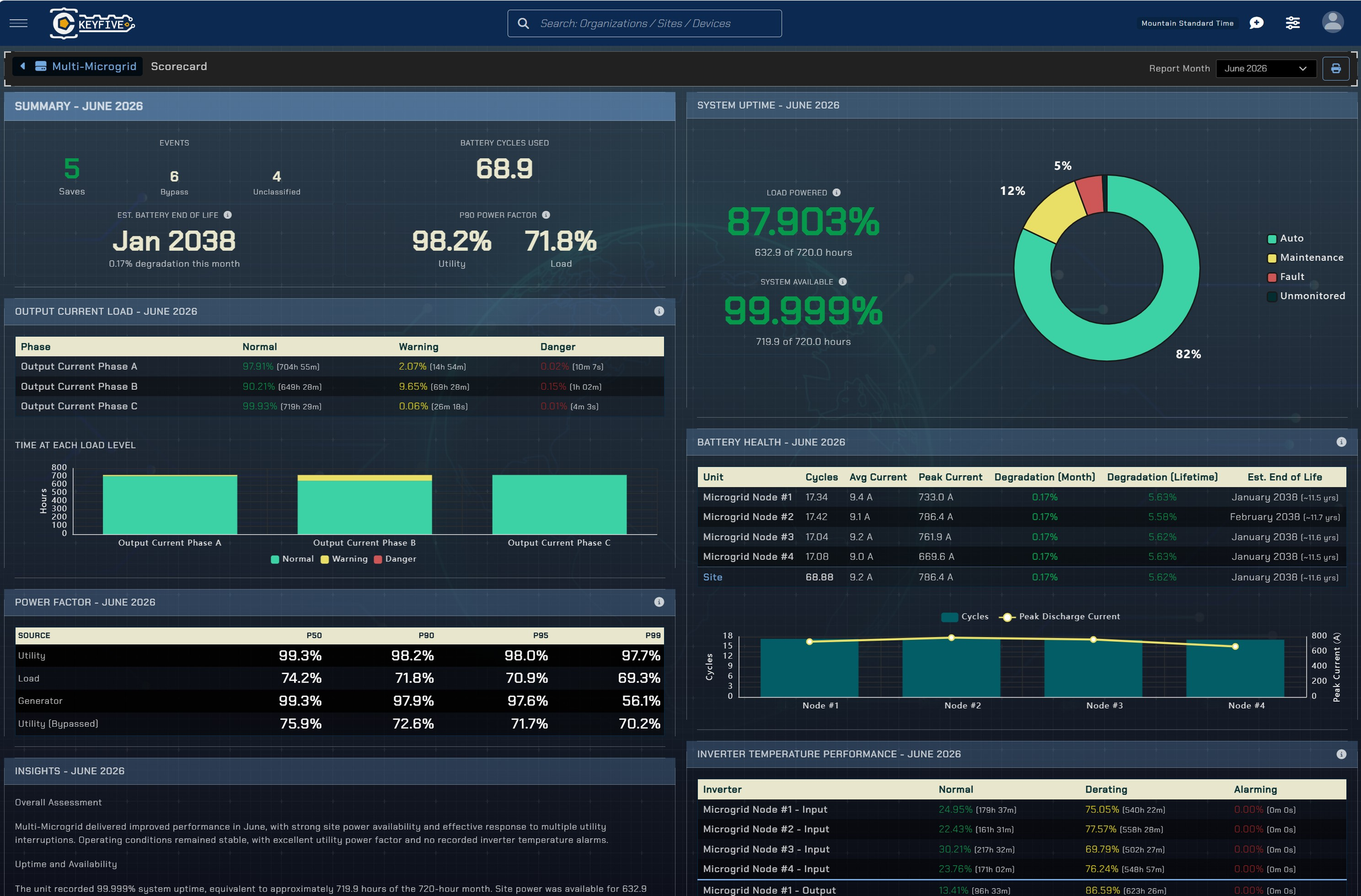
Keyfive’s Performance Scorecard summary dashboard.
Keyfive’s Performance Scorecard organizes operating history into a report that shows how an energy system performed and where it created value. As Barnett puts it, “Our system actually tells you how it’s paying for itself.”
It tracks events such as transfers that kept a site powered through a utility disruption, time spent undergoing maintenance or in fault states, power quality, and battery wear.
Additionally, it provides a financial view that connects operating activity to costs and savings, including generator fuel use and avoided peak charges. It gives engineers and business leaders a shared record they can take straight to the board room to assess performance and explain results.
2. Fast telemetry that captures the moments that matter
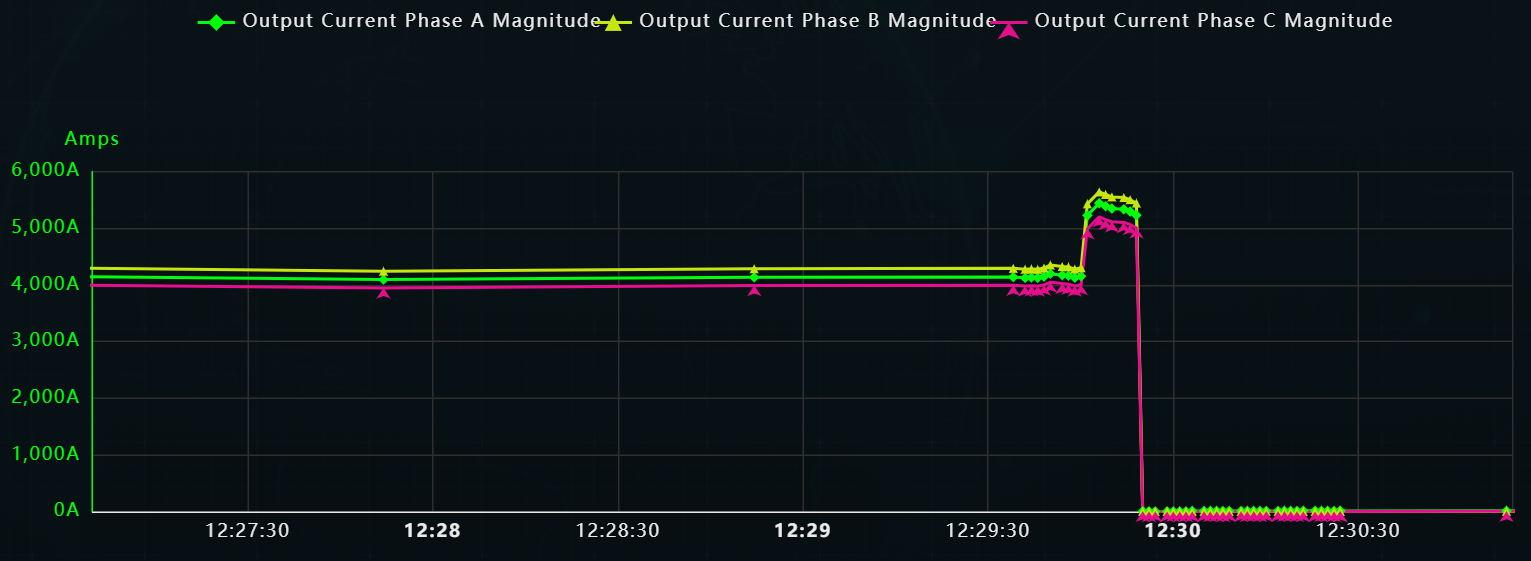
Example: Fast Telemetry around a microgrid overload event. Normally recording by the minute, the system switches to 1 second telemetry surrounding the event.
Streaming high-frequency data from every device and site costs a lot, so most systems send updates about once a minute. But a lot can happen in a minute.
Keyfive’s Fast Telemetry capability detects sudden significant changes at the edge, then sends a window of high frequency data surrounding the event to the cloud.
“Think of it like the instant replay in sports. If an interesting play happened, you want to go back and watch the video. And that’s what this does,” Barnett explains.
The “replay” provides useful context to the cloud, supporting alerts, investigation, and a stronger record of what occurred without incurring the cost of transmitting every reading.
3. An “engineer in a box” that helps explain anomalies.
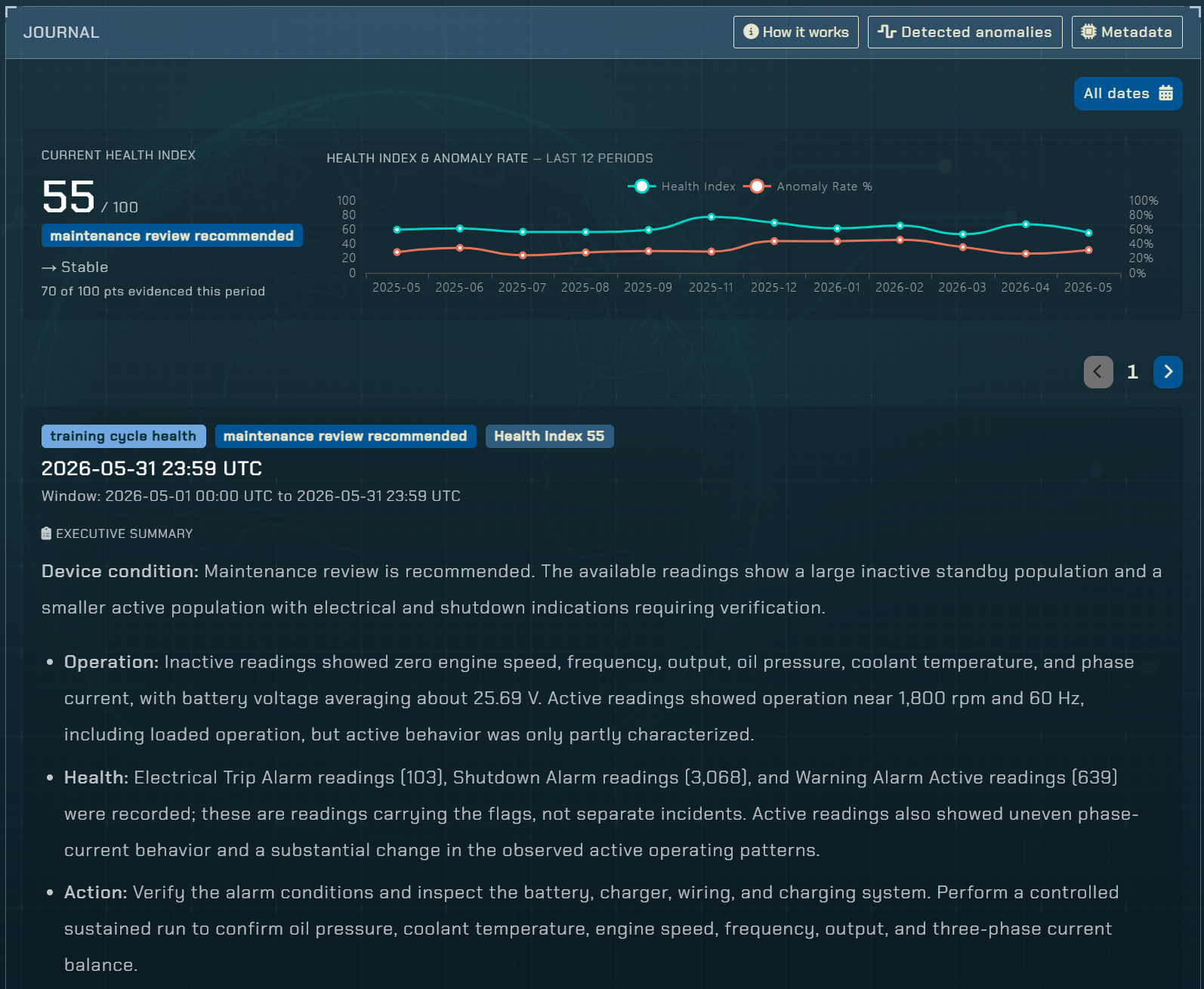
Engineer-in-a-box journal entry shows a summary of an event with a recommendation.
An anomaly alert tells you something is off, but it doesn’t tell you why. Keyfive’s emerging Engineer-in-a-Box takes the next step: contextualizing abnormal behavior against operating history and available technical information about the device (such as manufacturer’s specs) to produce an explanation for review.
It can help turn a finding such as unusual phase current into a more useful question about the equipment or site. For now, the explanation is a starting point for an engineer or operator, who can confirm what happened and add information the system could not see on its own.
How these technologies work together
Each feature makes the next one better, Barnett explains. “Scorecard values are saved for analysis by the AI. With Fast Telemetry, we get more data around interesting events. So the anomaly detector sees them, and then our Engineer-in-a-Box can take over to contextualize and explain it.”
Together, these capabilities give AI a stronger grounding in the system’s actual behavior, as well as give operators a clearer basis for deciding what to do next.
Want to see how they can enhance your current operations?