
Demonstrating Energy System Reliability and Value with Keyfive’s Performance Scorecard
Keyfive’s Performance Scorecard provides manufacturers and operators with a clearer, more accountable view of reliability, equipment health, and financial performance. Each month, it helps answer the practical questions owners and operators keep asking:
How did our power system perform and when did it matter?
What did it cost to operate, and where did it add value?
How did performance affect power quality and equipment life?
What can we learn from the decisions made?
“With the Performance Scorecard, we’re tracking these micro changes in the operating state,” says Daniel Barnett, CTO of Keyfive. “We're adding up the business value that our system creates. We're giving that to you in executive terms.”
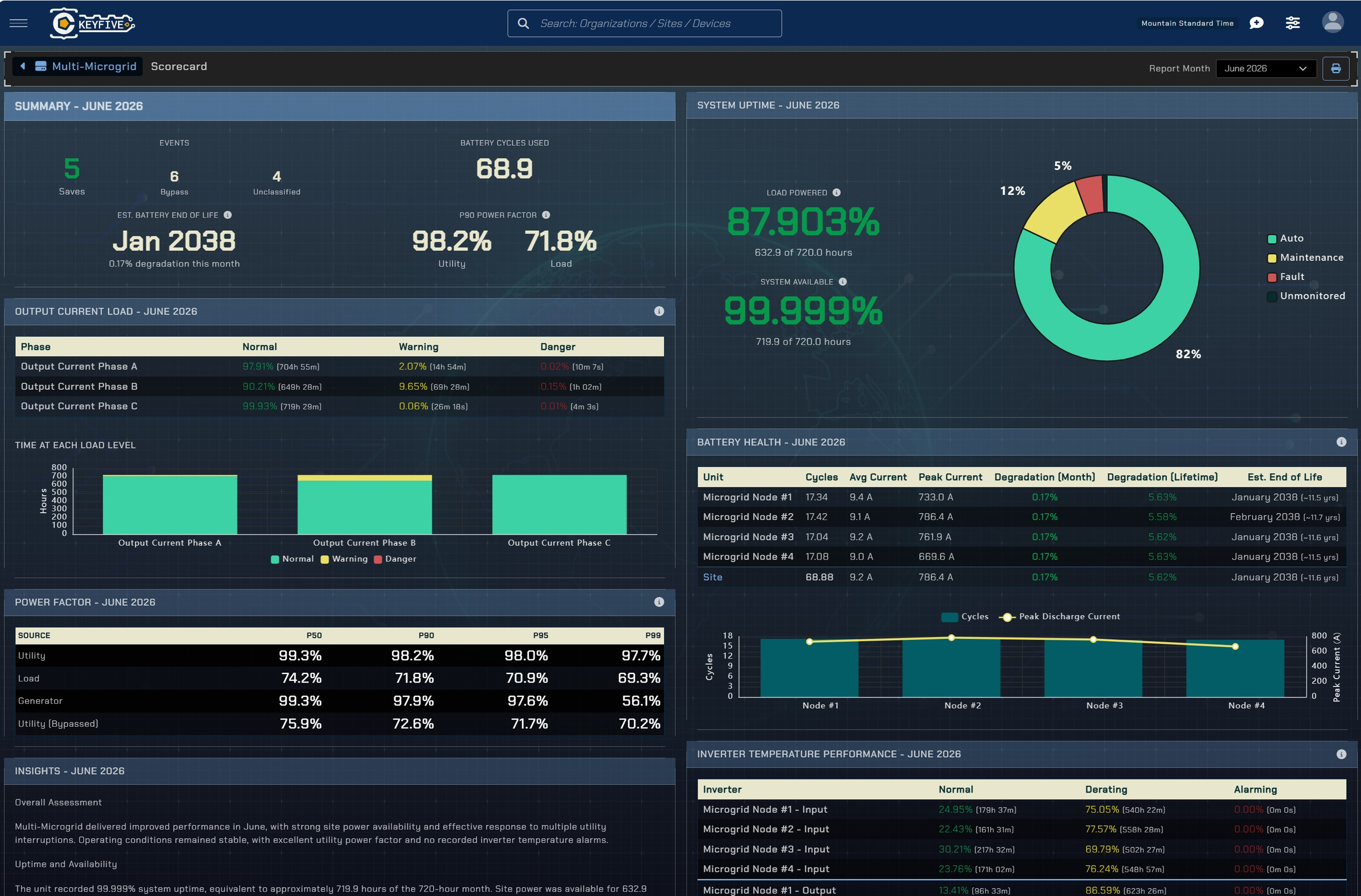
How did our power system perform and when did it matter?
The Performance Scorecard provides a system-wide monthly overview, distinguishing power delivered to the site from the power system’s own availability.
It records saves, described as when an automated transfer kept a site powered through a utility problem. And it records bypasses, or when demand exceeded the system’s capacity and the site transferred to utility power. Importantly, maintenance and fault periods are tracked separately, so a planned service window never reads like a failure.
The monthly assessment also describes how performance compares with prior months. Operators can add context to records and events, improving the accuracy of the report and creating a more useful labeled history for Keyfive’s AI features to analyze across the system.
What did it cost to operate, and where did it add value?
The financial view connects system activity to costs and calculated savings, including generator fuel use and avoided peak charges.
“Our system actually tells you how it’s paying for itself,” Barnett explains.
Keyfive estimates fuel consumption from monitored generator operation and the manufacturer’s fuel-use curve. An operator currently enters the applicable fuel price.
Together, these inputs show how long equipment ran, what it cost to operate, and which decisions contributed to the month’s financial results. Manufacturers and operators can use that record to explain value with more precision than a general claim of improved reliability.
How did performance affect power quality and equipment life?
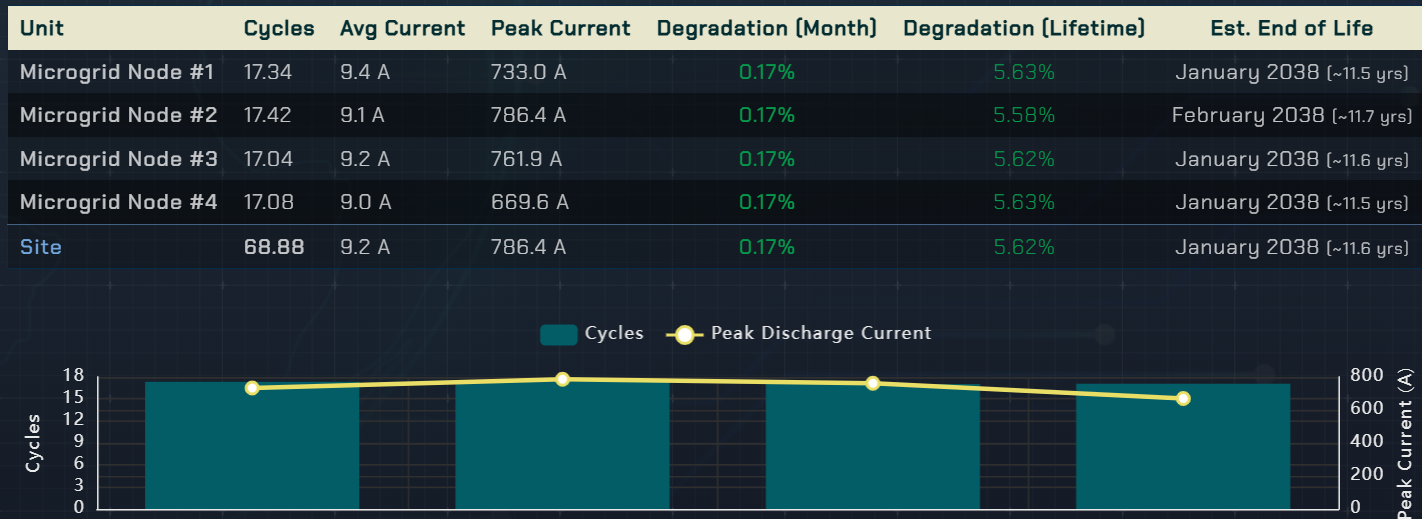
Example of tracked battery perforamace.
The scorecard also shows how the power system’s operations affect equipment life. For example, it models battery wear, using operating history and battery characteristics to provide an estimate of how long it will last.
Additionally, power-quality and phase-level load measurements show whether the site operated within expected ranges. A heavily loaded phase can put equipment at risk or contribute to a shutdown, making these indicators useful to engineers planning and investigating a site’s electrical use.
For a CFO or asset manager, these breakdowns paint a clearer picture of maintenance needs, replacement budgets, and total cost of ownership.
What can we learn from decisions made?
Choosing when to use onsite generation can feel like placing a bet. Run it during a high-demand period that affects utility charges, and the site may avoid costs. Run it at the wrong time, and it may burn fuel without the expected return.
While the scorecard does not predict which periods will matter, it shows the result afterward: why the system ran, what the decision cost, and where estimated savings came from. Its event history and month-to-month comparisons give teams evidence to evaluate past decisions and inform the next ones.
For equipment manufacturers, that account can become part of the value they deliver. Where the scorecard is made available, customers can see how their system performed, what it cost to run, and the value it produced. It gives both sides a concrete basis for service conversations and future operating decisions.
For more information on how Keyfive is innovating energy system management, check out our latest tech releases.
To learn how the latest technology can be applied to your system: