
Keyfive 2026: Q1 Build Brief
What’s New?
Software ecosystem upgrade to .NET 10 across core applications and control systems
Native, in-application user management for improved access control
Database infrastructure upgrade to Azure SQL Hyperscale and enabled read-only database replication
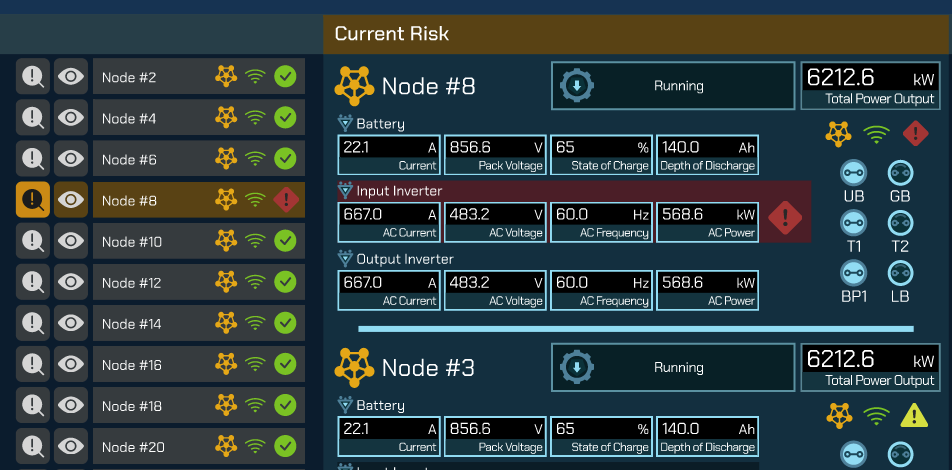
Early development of a new operator dashboard or fleet-wide device monitoring and operational visibility
Enhancements to observability and telemetry systems, improving data capture, retention, and real-time transmission performance
Dispatch locking capabilities for connected devices to improve operational safety and control
Key Upgrades to the Platform
Platform Modernization
Core applications and control systems have been modernized through a migration to .NET 10, improving overall platform performance and long-term maintainability.
This upgrade creates a faster and more scalable platform with improved AI architecture that will easily accommodate future iterations of the application.
Native User Management
User administration is now handled directly within the application, allowing administrators to manage access without relying on external tools.
This streamlines access control, reduces operational friction, and lays out the groundwork for more advanced user management capabilities that are already in development.
Scalable Data Infrastructure
The platform’s data environment has been enhanced with a migration to Azure SQL Hyperscale. This upgrade equips the platform with a stronger foundation for scale, growth, and resilience, and enables point-in-time restore capabilities.
Concurrently, observability and telemetry systems were enhanced to improve both reliability and real-time data availability. Updates to telemetry capture and retention improve system resilience, while fast telemetry capabilities now allow near real-time transmission when a device detects anomalous behavior or issues.Operational Monitoring Tools
Core development has begun on a new operator dashboard designed to improve fleet-wide visibility across connected devices.
This capability enables operations teams to quickly identify underperforming or problematic devices, improving situational awareness, and accelerating response times across the system.
Dispatch Locking for Connected Devices
Dispatch locking capabilities have been introduced for connected devices, enabling greater control over operational actions within the system.
This feature adds an additional layer of safety by allowing specific dispatch operations to be restricted or controlled, helping prevent unintended or conflicting actions in live environments.
Why It Matters
These upgrades collectively strengthen the foundation of the platform, moving it toward a more scalable, resilient, and operationally efficient system.
By modernizing core systems with .NET 10, the platform is better positioned for improved performance and more advanced capabilities over time.
Furthermore, enabling native user management in the application eliminates dependency on external tools and improves user experience.
The shift to Azure SQL Hyperscale and the introduction of read-only database replication significantly improves scalability and performance visibility without impacting the live production environment.
Operational enablement is also being strengthened through the introduction of a new operator dashboard improving visibility across connected device fleets and enabling faster diagnostics and response to system issues.
These upgrades also improve operational safety and control in live environments by reducing the risk of unintended or conflicting device actions during active system usage.
In summary, these upgrades move the platform toward a modern, operationally intelligent system where performance, control, and real-time visibility are built directly into the core architecture, enabling faster detection and more proactive system response.
Future Work
We will continue advancing the core priorities that strengthen Keyfive’s platform and long-term objectives.
This will include early-stage design work on a patent-backed initiative, improving high-capacity control systems, enhancing the Human-Machine Interface experience, and expanding cross-device communication and group-level system behavior.
We are proud of the progress we made in Q1 and look forward to building on this momentum in Q2.