
Five Signs Your Operational Data is Unreliable (and What to Do About It)
In modern industrial systems, data is supposed to improve safety and efficiency and reduce costs and uncertainty. But when the data itself can’t be trusted, it does the opposite. It produces false correlations, spits out inaccurate performance metrics, and clouds judgment in high-risk environments. Before you layer AI, automation, or fleet-wide optimization onto your critical infrastructure, it’s worth pressure-testing your data foundation.
Here are five common signs that your data is unreliable, the risk it creates, and how modern data solutions can build reliability into your data infrastructure moving forward:
Take the 3-minute reliability assessment to see where you’re winning and what to fix next. Get a tailored score and clear next steps.
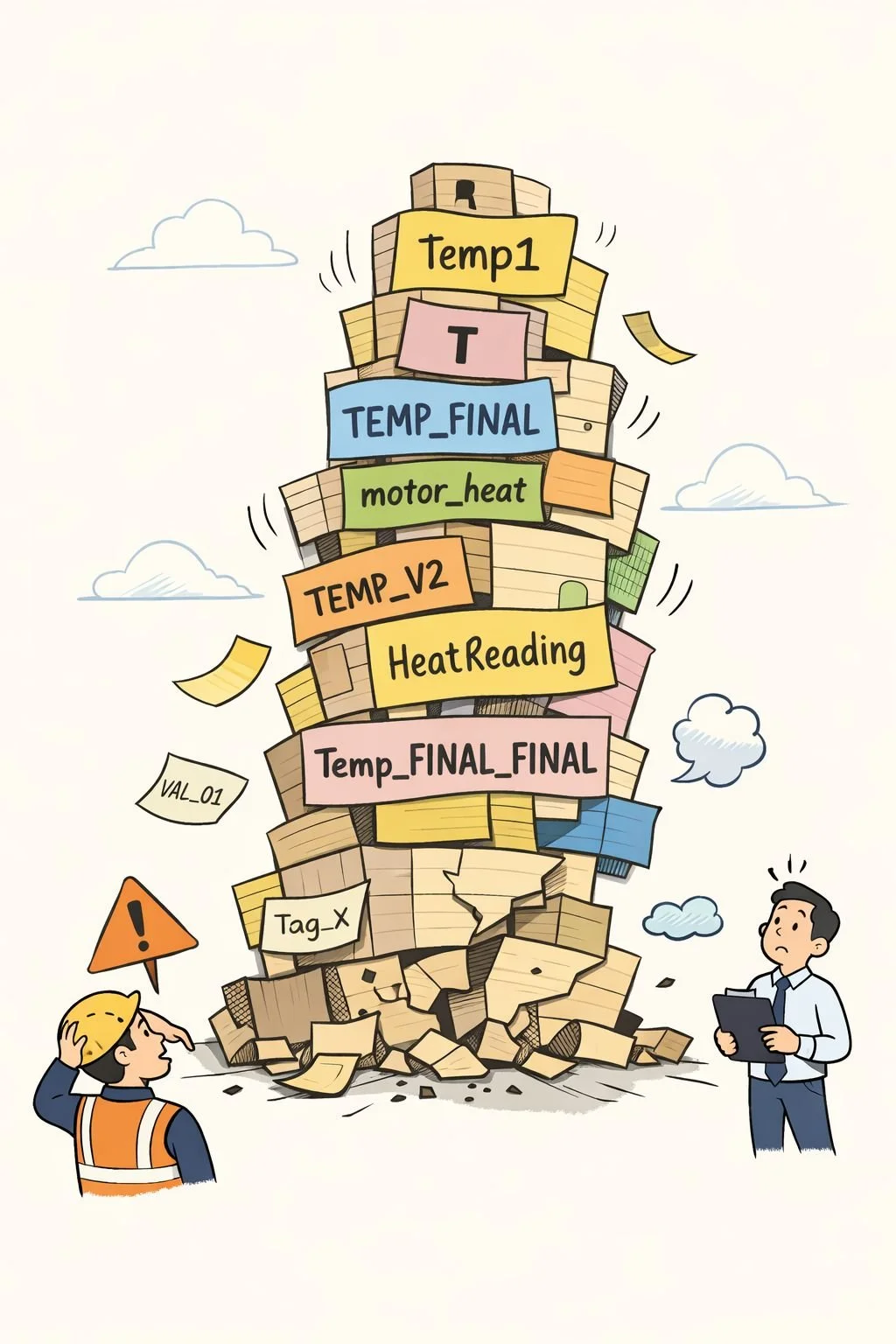
1. Mismatched labels and reporting practices:
What it looks like:
Data misalignment or mismatched labels (“engine_temp” on Unit C vs. “system_temp” on Unit E)
Missing canonical models or ad hoc tagging
Inconsistent measurement units
Vendor-specific definitions
The risk you’re taking:
On September 23, 1999, NASA lost the Mars Climate Orbiter spacecraft due to a mismatch in measurements used by different operational teams, the navigation team was tracking metric units (Newtons), but the calculations were being done in English units (pounds). The mistake sent the craft 60 miles off course over 286 days, only to be destroyed by the Martian atmosphere.
Albeit a very costly example ($125 million), discrepancies in data labeling and reporting practices are common and often a sign of deeper data fragmentation or misaligned KPIs across your organization. This oversight causes correlation and conversion issues and increases risk as you look to advance with automation and AI. Mismatched data delivers unreliable baselines, leading to bad decisions at speed when computing across sites or fleets.
How to address through reliable data solutions:
Prioritize compiling, cleaning, and normalizing data on your AI roadmap. Early AI projects should focus on sweeping and organizing data across OT/IT operations, eliminating anomalies, and establishing a unified language and data infrastructure for future model development. This requires organizational alignment and critical coordination across OT, IT, and vendors.
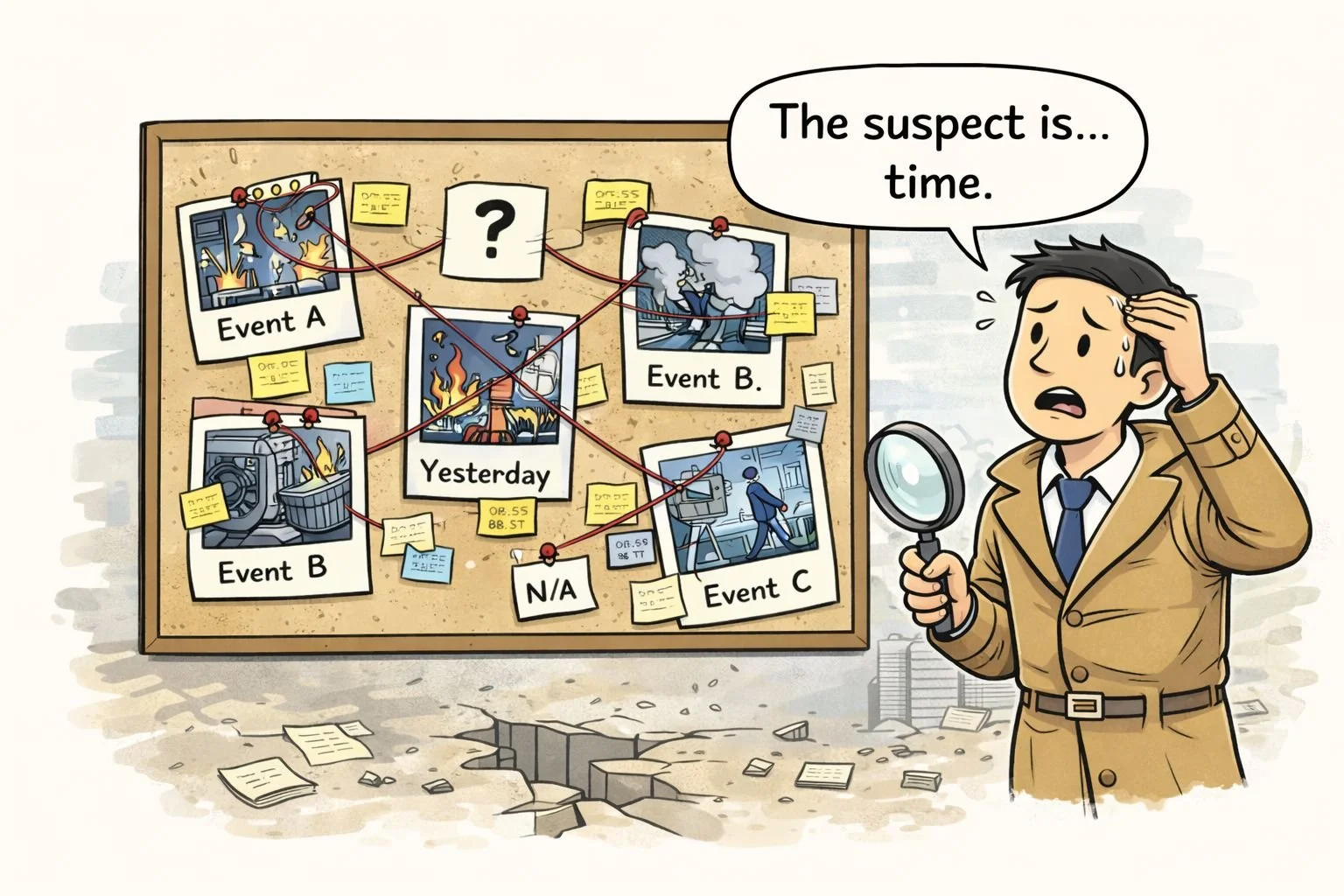
2. Your data timelines don’t agree
What it looks like:
Clock skew
Mismatched time zones
Latency in data
Inconsistent timestamping across devices and servers
The risk you’re taking:
When two systems report the same event seconds, hours, or even days apart — or when unsynced clocks make the sequence of events unclear — Root Cause Analysis (RCA) stalls. Teams are unable to correlate signals or identify false positives, and systemic processes venture off course.
In December 2025, a power outage in Boulder, Colorado slowed down the national clock by 4.8 microseconds, risking “critical infrastructure, telecommunications, GPS signals and more,” reported NPR. Thankfully, the national timekeeper (NIST) had redundancies in place to protect time integrity across the grid, including a paid worker tasked with watching and keeping perfect time.
How to address through reliable data solutions:
Your data platform has to keep up with the pace of real-world networks and real-world devices. Otherwise, automation, predictive, and intelligence capabilities will be built on shaky ground. Signals need to be validated, identified, and put into order as they are captured. This requires time-aligned computing at the edge, alongside continuous monitoring for clock drift backed by confidence scores to support synchronization.
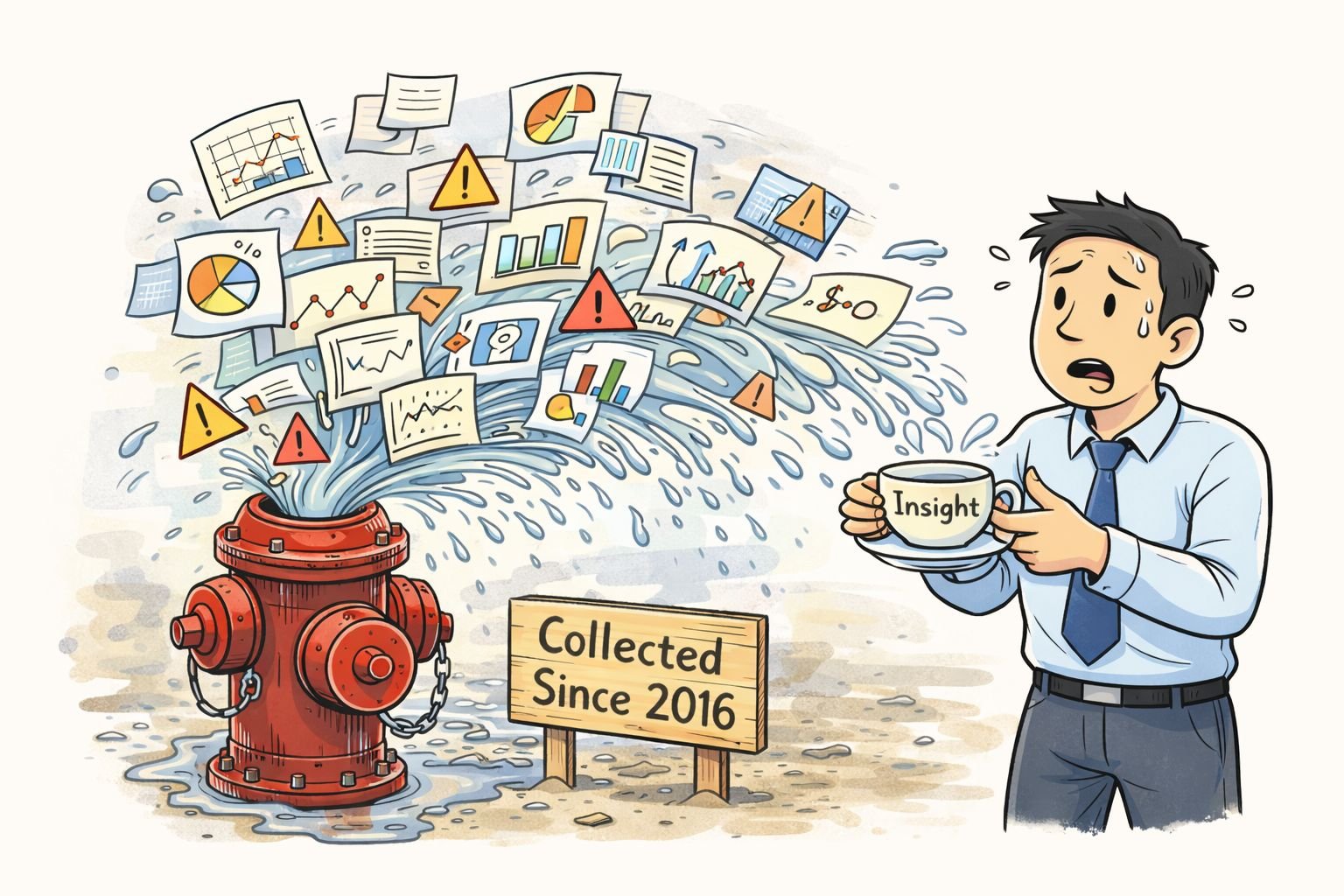
3. You're drowning in data but thirsty for insight
What it looks like:
Storage bills rise while reliability stalls
Multiple dashboards with low utilization
Overcollection without feature extraction or downsampling
Data collections that aren’t tied to operational workflows or value plans
Multiple requests for data dumps
Poor performance of AI/ML systems
The risk you’re taking:
Overcollection—or misguided collection—leads to data exhaustion, increased costs, and unnecessary complexity. A global survey conducted by the research firm IDC found that most organizations are using less than a third of the data they are collecting. Why? Data usability, data storage and security, missing data, and siloed systems are holding them back.
As a result, workers waste time sorting through noise and dashboards, miss critical signals, and prolong corrective actions when things go wrong. The answer isn’t to stop collecting data; it’s to start putting your data to use through purpose-driven workflows that drive operational outcomes.
How to address through reliable data solutions:
Your system should be smart about the data it sends, stores, and acts on. That means sampling at high resolution while extracting key features at the edge, prioritizing detection and diagnosis through anomaly-first workflows, and implementing adaptive, event-driven data retention strategies. This reduces noise, surfaces issues faster, and enables you to transmit compact insights.
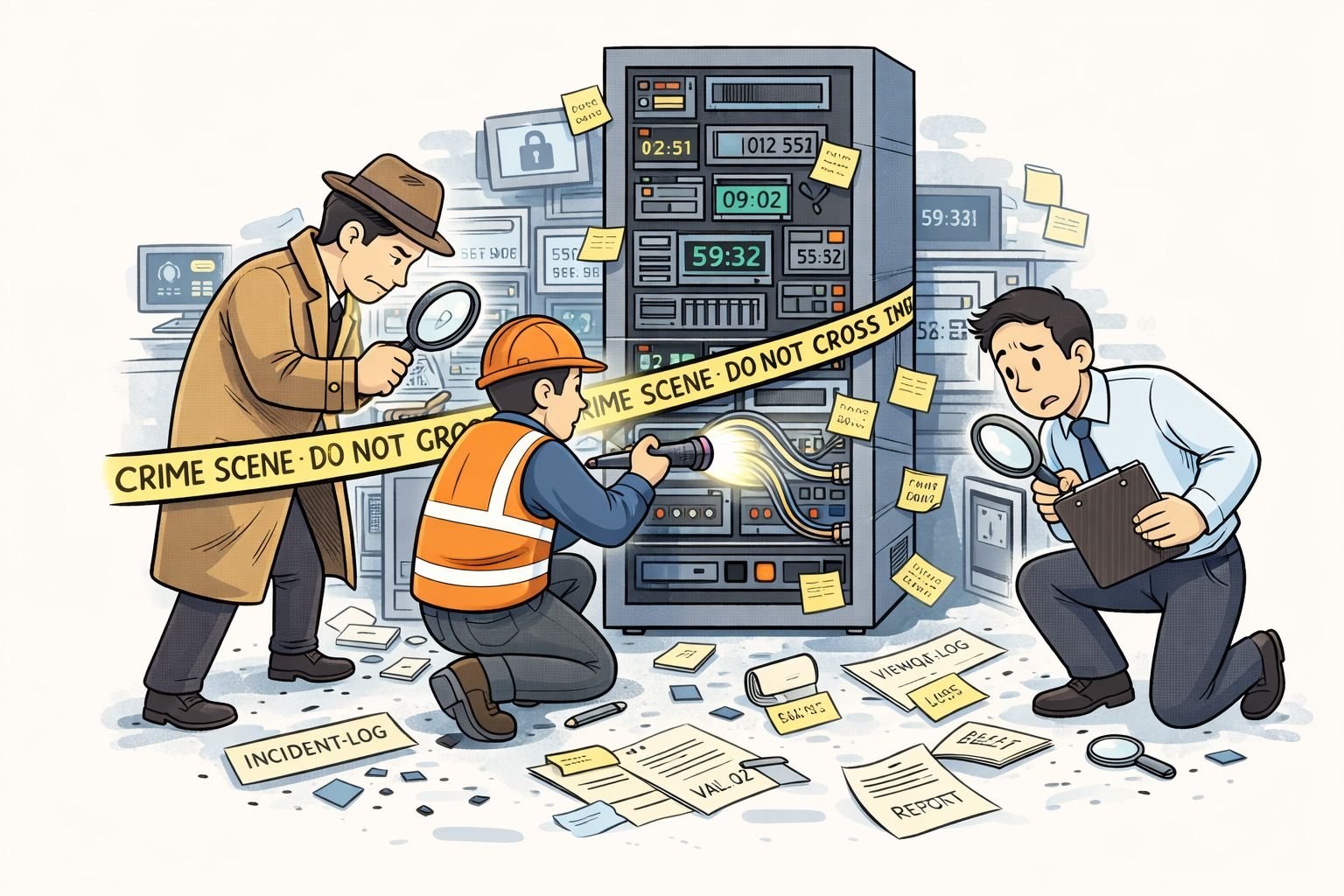
4. Incident and compliance reporting feels like archaeology
What it looks like:
Inconsistent data retention strategies
RCA and incident management require hunting across devices, systems, and historians
Misalignment across individual and team reports
Missing audit trails
Unknown lineage across data streams or limited traceability
Evidence isn’t reproducible
The risk you’re taking:
Data serves a dual purpose, both driving and protecting a business through invaluable insights and historic documentation of proof. Businesses rely on data to compile incident reports, demonstrate compliance, or back warranty or insurance claims.
But if reporting feels more like a scavenger hunt across logs, spreadsheets, and portals, you’re wasting time and risking errors, audit exposures, and reputational damage.
How to address through reliable data solutions:
Reporting shouldn’t feel like a crime-scene investigation. Your data tooling should promote a single source of truth, ensuring data integrity from edge-to-cloud. Sign and track data at the source, through every transformation, and into the models that generate KPIs and alerts. Preserve high-fidelity incident data across available components and package it as evidence for RCA and compliance workflows.
5. You don’t actually own your data
What it looks like:
Vendor-specific or restrictive access
Unusable formats or non-standard exports
Export costs
Fragile integrations
The risk you are taking:
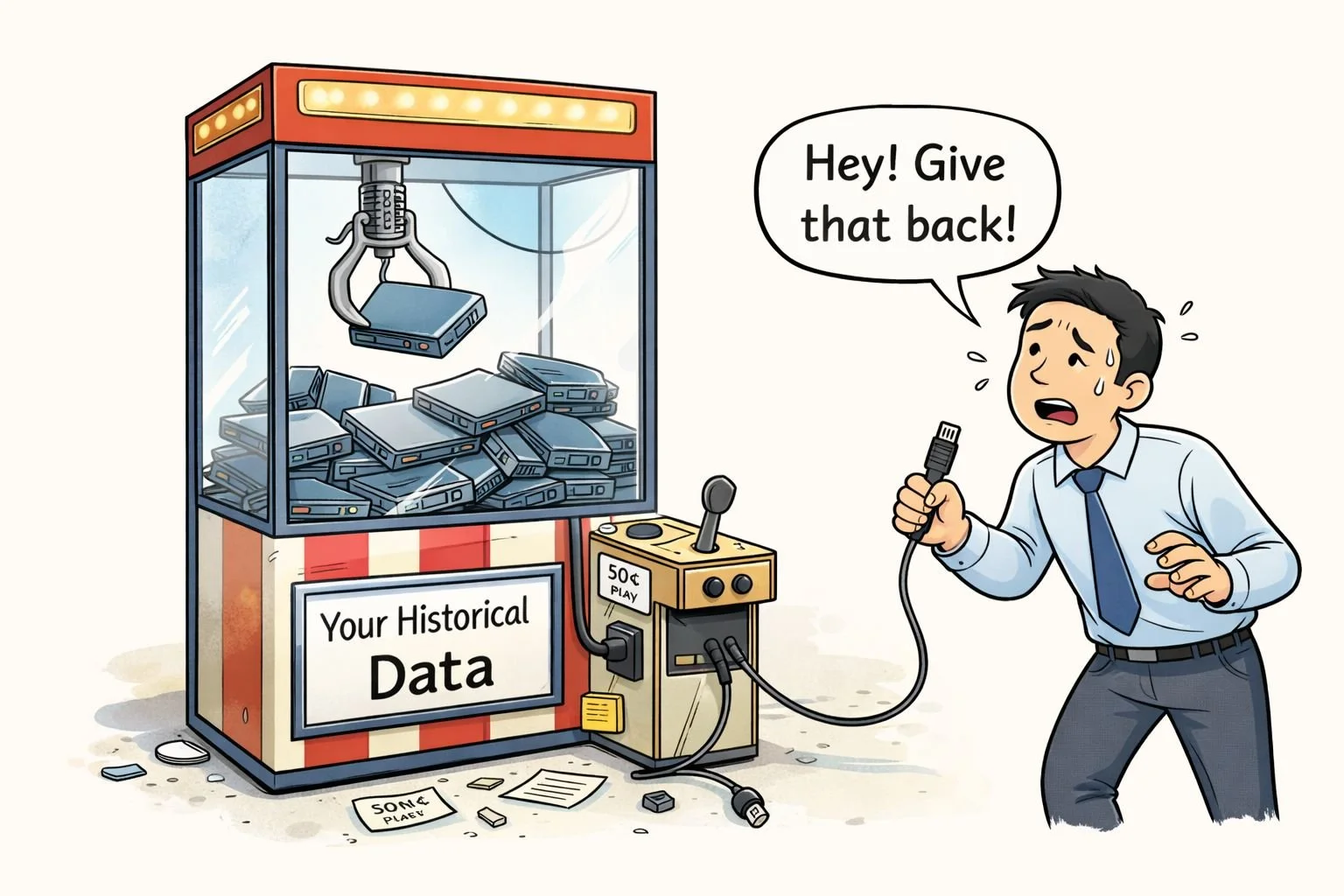
If your data is being held hostage through restrictive vendor access protocols or non-standard exports—or is lost completely due to contract or platform changes—then it’s not truly your data to manage or use. You’re forfeiting the power to switch analytics platforms, merge datasets, or run independent validation.
And without historical or complete datasets, innovation is stifled. AI models cannot succeed on incomplete datasets that lack context, hindering efforts to implement intelligence programs across systems or asset lifecycles.
How to address through reliable data solutions:
A vendor-agnostic data hub with standard API access can keep information usable across the tools you already run, while flexible storage and retention policies let you decide where, when, and how it’s stored—so your history stays intact and your analytics options stay open.
Build a Reliable Data Solution with Keyfive:
At Keyfive, we believe you should have access to your data when you need it, how you need it, and you should be able to trust it. Our digital twin platform is designed to integrate across mixed IT/OT environments, normalize and contextualize operational data, and give organizations lasting ownership over the information that runs their business.
If you’re ready to turn messy telemetry into reliable operational intelligence, request a no-touch assessment.