
BMS, DCS, and SCADA integration with your power systems.
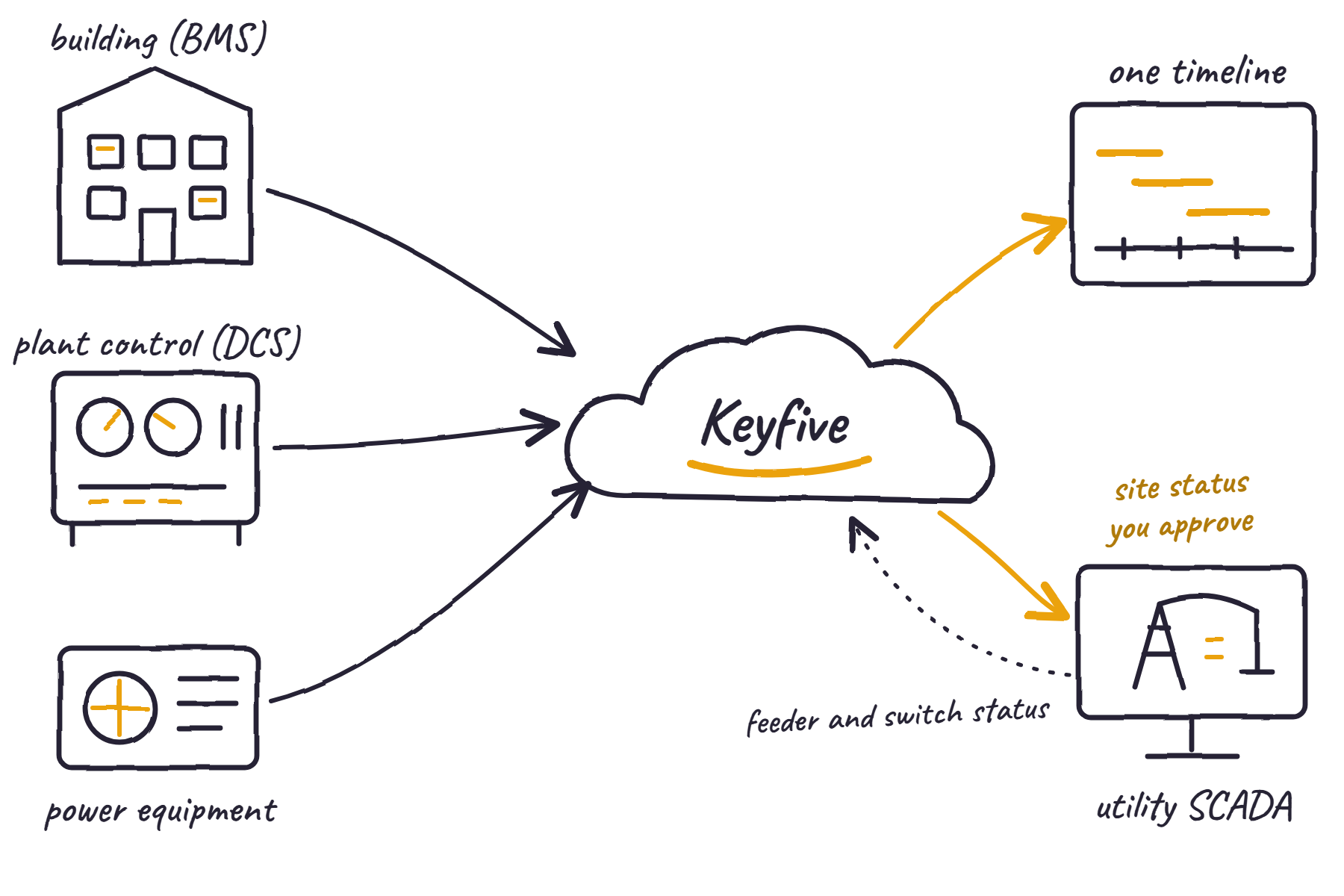
Keyfive can bring data from your building management system (BMS) and plant control systems in beside your power equipment, so a power event and everything it touched sit on one timeline. It can also share site status with the utility’s grid systems. Your control systems keep running the building, the plant, and the grid.
How does BMS, DCS, and SCADA integration work?
Keyfive connects through the interfaces your controls and security teams approve, like an OPC server, a historian export, or standard utility protocols such as DNP3. It reads from building and plant controls and doesn’t change their settings. With grid operators, Keyfive shares the site status you approve and doesn’t operate the network.
Jump to: Building management · Plant control · Grid operations
Building management integration
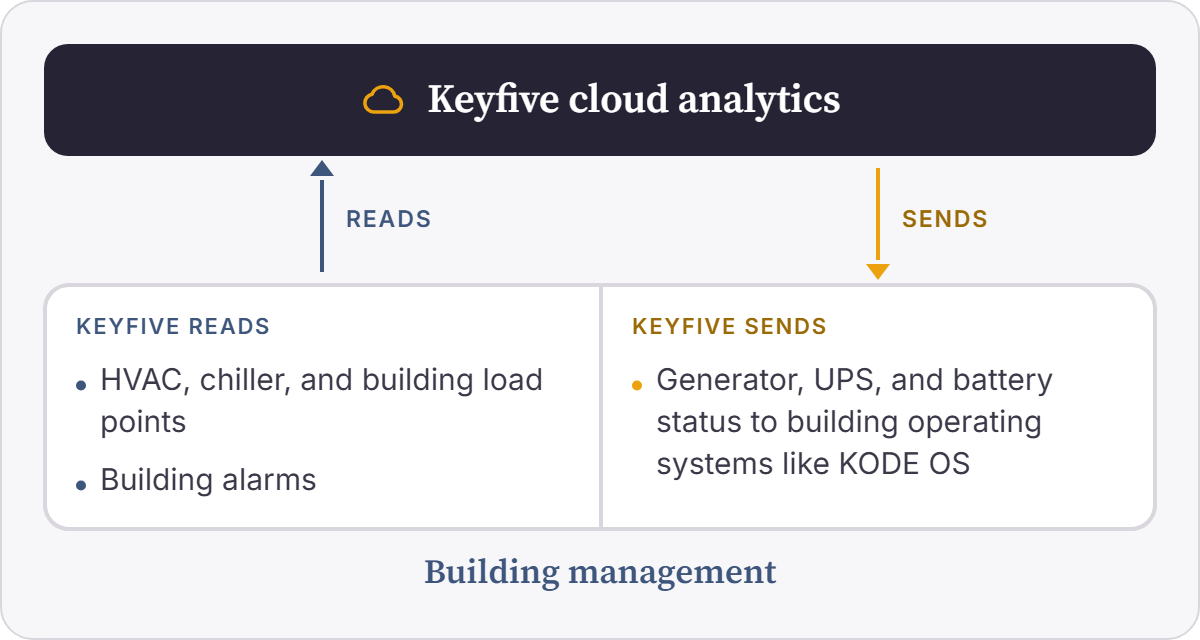
Keyfive can bring HVAC, chiller, and building load data from your building automation system (BAS) onto the same timeline as your generators, UPS, and switchgear, so a transfer and the chiller restart that followed show up together. Reliability Intelligence can trend mechanical equipment from those points, and with Energy Intelligence embedded, Keyfive can use building load to plan generation and battery dispatch. Keyfive reads from your BAS and leaves setpoints and schedules alone. With building operating systems like KODE OS, it can also share power status back, so facility teams keep one screen.
Common systems: Tridium Niagara Framework, Johnson Controls Metasys, and KODE Labs KODE OS
Plant control integration
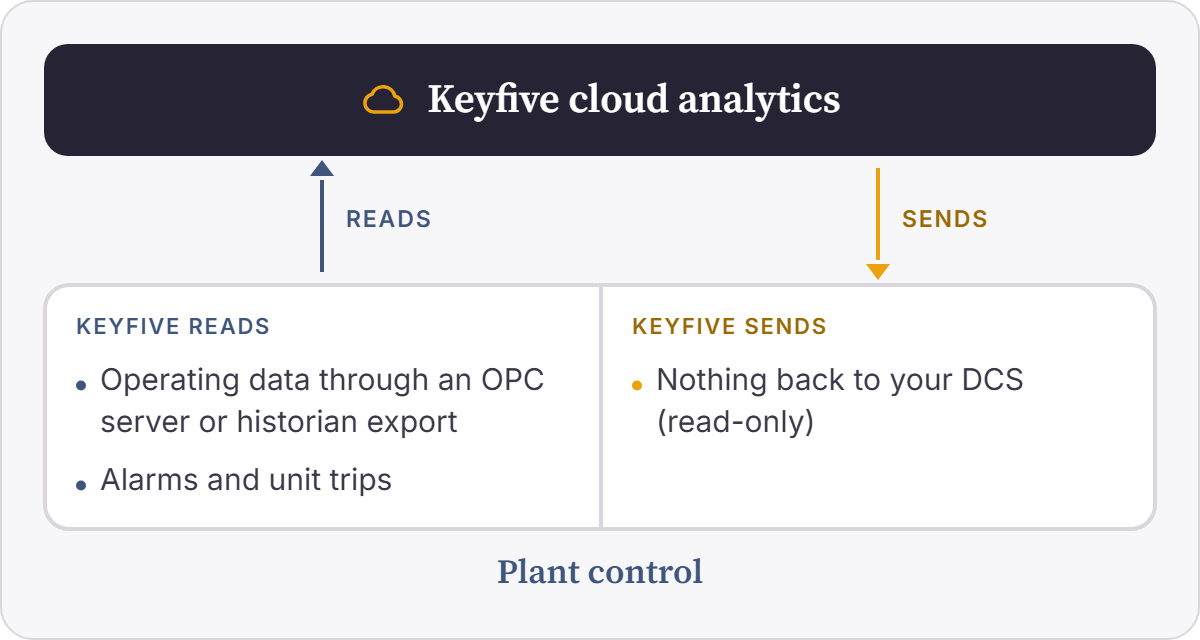
Keyfive can read operating data from your distributed control system (DCS) and compare similar equipment across units and plants. Reliability Intelligence can learn normal behavior for pumps, fans, and turbines and flag the one that starts to drift from its peers. When a unit trips, Keyfive can assemble a time-aligned record of what happened. The connection is read-only, through an interface your plant security team approves, like an OPC server or a historian export.
Common systems: Emerson Ovation
Grid operations integration
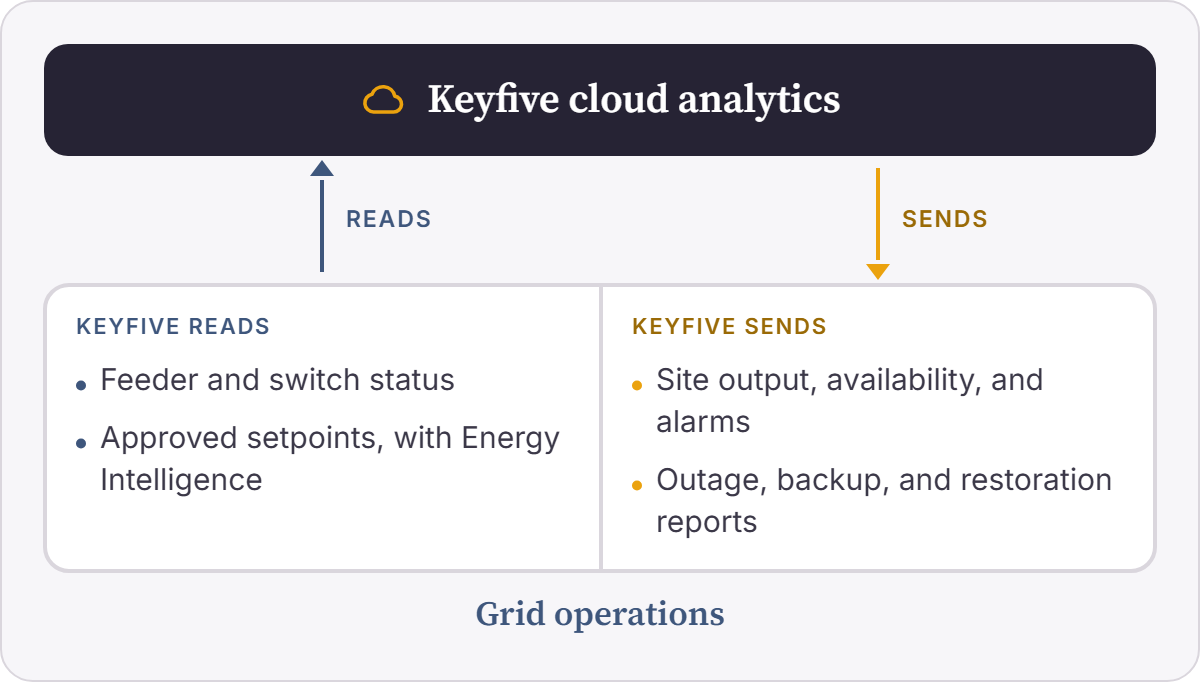
Keyfive can share status from the generators, batteries, and switchgear at your sites with the utility’s supervisory control and data acquisition (SCADA), distribution management, and outage management systems. Operators see each site’s output, availability, and alarms with the cause attached, and Keyfive can hold back values that look stale or wrong. When a site loses utility power, Keyfive can report the outage, whether the site is on backup, and when power returns. It can also read feeder and switch status, so each site event shows the grid conditions around it. You and the utility approve what’s shared, and grid control stays with the operator.
Common systems: Siemens Spectrum Power, SurvalentONE, Schneider Electric EcoStruxure ADMS, Oracle Utilities Network Management System, GE Vernova GridOS ADMS, and AspenTech OSI monarch
Don’t see your building, plant, or grid system?
The systems above are common examples, not a complete list. Keyfive’s data architecture is flexible, so we can connect to the building, plant, and grid control systems you already run. If your system isn’t listed, we can scope a connection for it during onboarding.
Benefits of connecting your BMS, DCS, and SCADA.
One timeline across systems
Building, plant, and power data line up on the same time stamps, so cause and effect are easier to follow.
Your controls stay in charge
Keyfive reads from building and plant controls. Changes to setpoints and control logic stay with your team.
Site detail for grid operators
Utilities can see the status you approve from the sites Keyfive monitors, including the cause behind each alarm.
EXAMPLE
A hospital generator test with building and power data on one timeline.
Take a hospital campus that runs Niagara for building automation and a separate system for its emergency generators. Here’s how the same monthly generator test could play out with and without Keyfive connected.
| Without Keyfive | With Keyfive | |
|---|---|---|
| Running the test | The test runs, and building and power data stay in separate systems. | Keyfive can put building points and power events on one timeline as the test runs. |
| Spotting the problem | Two air handlers trip, and nobody can tell whether the transfer caused it. | Keyfive can show the air handlers tripping on a voltage dip during the transfer. |
| Fixing it | Facilities and electrical teams trade notes and screenshots to agree on a cause. | The team can share one timeline with its controls contractor to adjust restart timing. |
| Checking the next test | Someone watches the next test in person to see if it happens again. | Keyfive can record every later test the same way. |
Illustrative example. Your setup depends on the systems you run and the rules you choose.
BMS, DCS, and SCADA integration FAQs
-
BMS integration connects your building management system to other systems on site. With Keyfive, HVAC, chiller, and building load data sits on the same timeline as your generators, UPS, and switchgear, so you can see how the building and the power system affect each other. Keyfive reads from your BMS and doesn’t change its settings.
-
No. Keyfive reads from building automation and plant control systems. It doesn’t change setpoints, schedules, or control logic.
-
No. Keyfive shares site status with the utility’s systems. Grid control stays with the operator.
-
With Energy Intelligence embedded, Keyfive can pass approved setpoints to site equipment where the site owner and the utility agree to it.
-
Through a read-only interface your plant security team approves, like an OPC server or a historian export.
-
Standard utility protocols like DNP3, depending on what the utility’s system supports.
-
You and the utility approve the point list.
-
Keyfive can manage it for you, or your team can own parts of it with our support.
Find out what your power and control data can show together.
Tell us about your operation: a fleet you're trying to instrument, a compliance gap you're tired of patching, or an asset that costs you every time it goes down. We'll deliver a free assessment, providing a snapshot of how our engineers approach and solve problems like yours.
All product names are trademarks of their respective owners.